


Speaking on the success and impact of the Top 10 Emerging Technologies report, Frederick Fenter, Chief Executive Editor of Frontiers, reflects on the importance of science in shaping the conversations that define our future.

What does it take to keep a city a decade ahead? In this keynote, delivered at Frontiers Science House’s roadshow event in Dalian on the sidelines of the Annual Meeting of the New Champions (AMNC), Abdulaziz AlJaziri explains how the Dubai Future Foundation works to keep Dubai ten years ahead.

Can innovation move fast enough to meet the climate challenge? Three experts tackle that question in this panel from Frontiers Science House’s evening in Dalian, part of a global roadshow putting scientists at the table alongside policymakers and business leaders shaping the global agenda.
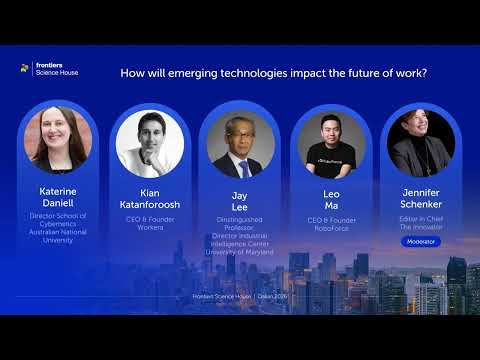
Frontiers Science House travels from Davos to Dalian to give scientists a seat at the table alongside global decision-makers. In this panel, four experts convened to discuss how technology is reshaping how we work, lead, and learn, and what this shift means for organizations and workers over the next decade. The session builds on the World Economic Forum's Top 10 Emerging Technologies of 2026 report, produced in collaboration with Frontiers, unpacking how rapid automation and AI are reshaping the skills companies need and the workforces they employ.
Speakers
Katherine Daniell, Director, School of Cybernetics, Australian National University
Kian Katanforoosh, Founder and CEO, Workera
Jay Lee, Distinguished Professor and Director, Industrial Artificial Intelligence Center, University of Maryland
Leo Ma, Founder and CEO, RoboForce
Moderator: Jennifer Schenker, Founder and Editor-in-Chief, The Innovator

Introducing Frontiers Science House and its mission to bring transformative science to the global agenda. From rapid innovation to geopolitical and geoeconomic decision-making, science can help tackle global risks if the right partnerships and knowledge-sharing frameworks are put in place.

Introducing Frontiers Science House and its mission to bring transformative science to the global agenda. From rapid innovation to geopolitical and geoeconomic decision-making, science can help tackle global risks if the right partnerships and knowledge-sharing frameworks are put in place.

Introducing Frontiers Science House and its mission to bring transformative science to the global agenda. From rapid innovation to geopolitical and geoeconomic decision-making, science can help tackle global risks if the right partnerships and knowledge-sharing frameworks are put in place.

How can “One Sustainable Health” governance help societies confront escalating climate, biodiversity, and public-health risks? Civil society, academia, and scientific leaders are calling for cross-sector action that treats human, animal, and environmental health as an interconnected system rather than separate domains.

Can the future of food production and pharmaceutical development shift into sustainable biofactories? From bespoke molecules and advanced therapeutics to engineered tissues and new materials, bioreactors are becoming the manufacturing engines of the future.

Will advancing AI ultimately lead to a complete healthcare overhaul? Business models, value chains, and skill sets need to be redefined.

How close are we to quantum systems that finally matter for industry? A new wave of quantum computing companies is rethinking qubit design, materials, architectures, and error-correction to accelerate the path toward practical, deployable quantum machines.
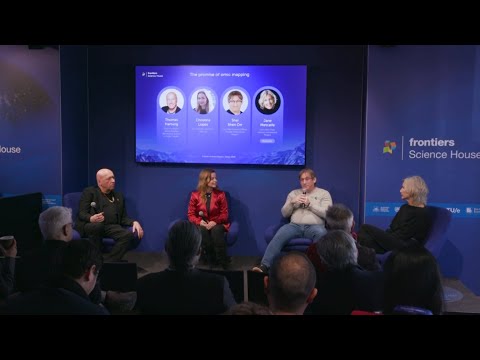
How can we unlock the full potential of omics to transform disease prevention and treatment? Intrepid research teams are working to link the microbiome, metabolome, and immunome to disease risk, prognosis, and therapy response.

How will structural batteries reshape the way we build, move, and power the world around us? By embedding energy storage directly into materials, structural batteries promise lighter vehicles, self-powered buildings, and even energy-harvesting textiles.

How can market-based models unlock the vast majority of genomic data that remains inaccessible today? Just 15,000 of Earth's 10 million to 1 billion species have been sequenced—yet those few sequences enabled most modern biological breakthroughs.

How can we prevent antimicrobial resistance (AMR) from destabilizing modern medicine? This session brings together biotechnology innovators, healthcare experts, and regulators to explore new trials, novel procurement models, and smarter data sharing.

How can microgravity environments revolutionize medicine? Join SPARK Microgravity's co-founders for a journey to the edge of medicine, where cancer and brain diseases are being reimagined in orbit.

How will therapies evolve as precision biomedicine moves from small clinical trials to everyday care? Building on programmable RNA therapies, targeted gene editing, and patient-tailored nanomedicine manufacturing, this dialogue explores how individualized medicine can be delivered safely and affordably.

What new models can carry advanced therapies forward when traditional markets cannot? Advanced cell, gene, and tissue-engineered therapies are progressing rapidly, yet their complex value chains and high development costs no longer fit established commercial pathways.

Join Arctic Basecamp and Frontiers to mark ten years of sounding the alarm on polar tipping points and their worldwide consequences.

Living longer, thinking better: brain longevity meets brain-based AGI. Aging societies face rising cognitive decline and Alzheimer's, which threaten lives and strain healthcare systems.
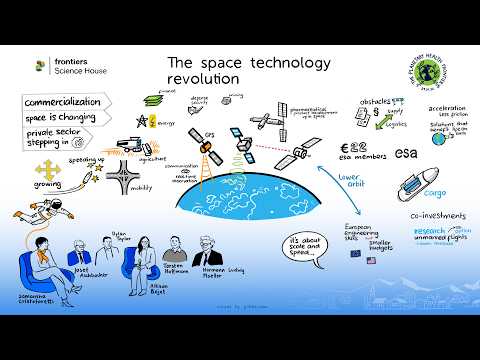
Could insights from space shape the decisions that define our future? The space revolution is poised to reshape modern life much as the internet did a quarter-century ago.

Is climate science losing value on the international stage? From faltering NDC submissions and U.S.

How can fusion reactors achieve stable magnetic confinement long enough to power the grid? High-energy plasma experts from one of Europe's leading companies will share their latest insights into designing and operating stable fusion systems.

What should be permissible in the race to limit global warming, and where do we draw the line on geoengineering? Experts engage in a frank discussion of climate interventions—from carbon dioxide removal to albedo modification—grounded in the latest science.

How can Southeast Asia transform acute climate vulnerability into a model of resilient, equitable development for the Anthropocene? In this 45‑minute, high‑impact session, regional climate leaders and global experts identify concrete opportunities for applying the Planetary Boundaries framework to ASEAN's unique ecological and socio-economic context.

How can the world's most groundbreaking science accelerate real-world transformation? Join the latest Frontiers Planet Prize champions, each of whom were awarded 1 million USD to accelerate the impact of their work, as they reveal how their award-winning research is advancing planetary boundary research – from promoting equitable trade, diversify farming and enable greener cities.
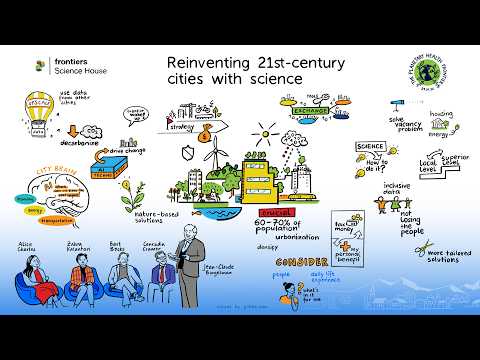
How can science, innovation, and governance converge to make cities equitable, climate-resilient, and regenerative? This high-level session brings together city leaders and systems thinkers to explore actionable pathways grounded in consensus-driven planetary boundary science and award-winning scientific research.

What could medicine achieve if we fully mapped the human immune system across populations and lifespans? The Human Immunome Project (HIP) is building the world's most comprehensive effort to decode the biological foundations of immunity.

What does the future of education and training look like in an economy transformed by AI and emerging technologies? This session explores how schools, universities, and employers can adapt curricula, credentials, and learning models to build adaptable, resilient workforces.

Can science deliver the breakthroughs needed to decarbonize how people and goods move around the world? Researchers are advancing sodium-based batteries, lightweight materials, novel propulsion systems, and digital design tools that could transform vehicles and aviation.

How can we scale the world's data infrastructure without accelerating the planet's energy and emissions crisis? As digital services expand and AI workloads surge, data centers are becoming critical engines of innovation—and major drivers of electricity demand.

This evening session celebrates Wikipedia's 25th birthday and explores the importance of the online commons as digital infrastructure, relied upon by billions of people and most commercial large language models. A panel discussion, led by Wikipedia's founder Jimmy Wales, convenes high-level thought leaders for a conversation about trustworthy information, the sustainability of the knowledge ecosystem, and the challenges and opportunities for collaboration in the public interest.
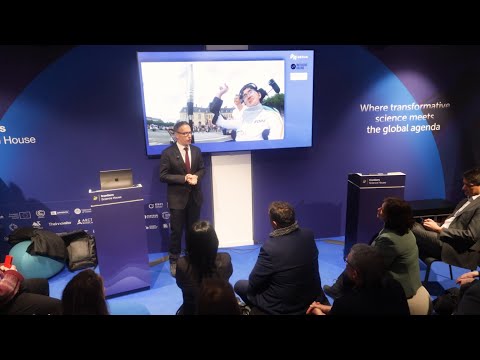
Will computing become an integral part of our physiological and cognitive foundations? New brain–computer interface (BCI) technologies are rapidly progressing from restorative prostheses to potential cognitive enhancement, while biocomputing is already using living cells for computational tasks.
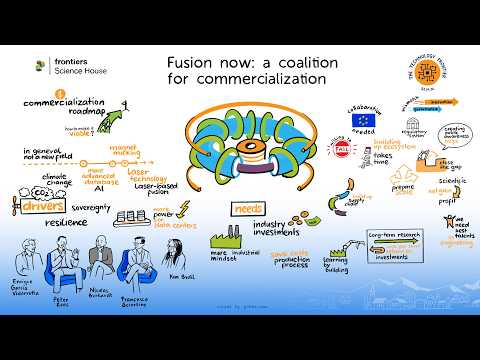
How close are we to commercially viable fusion, and what stands in the way? Breakthroughs in laser ignition and magnetic confinement have propelled fusion back into the spotlight, just as AI and climate pressures intensify demand for abundant clean energy.

How can AI systems evolve from powerful tools into trusted partners that enhance human agency rather than replace it? The next phase of artificial intelligence is not defined by ever-larger models, but by systems designed to understand human perspective, context, and intent.

Can a marketplace rebuild trust and enable global genomic data sharing across geopolitical divides? The next generation of biotechnology depends on unlocking the 99.9% of non-human genomic data that remains unsequenced or unshared.

What happens when quantum technologies reshape science and industry as profoundly as AI has? The coming quantum decade could unlock new capabilities for managing highly complex systems—from climate and biological networks to secure communications.

What are the intelligence frontiers that lie beyond LLMs? AI is already mastering informational synthesis but doesn't yet have understanding.

How will the convergence of AI with quantum computing, bioengineering, advanced materials, and robotics accelerate transformation across sectors? This session examines how breakthroughs at these intersections can unlock new capabilities—from intelligent therapeutics to autonomous industrial systems.

Join the conversation about the intersection of AI, biotech, and highly creative approaches to close cancer's unmet needs. In this session, our speakers discuss how targeted therapies and peptoid innovations, plus cross-species insights, can improve patient outcomes.

What should open science look like by 2035, and how can we build the governance to get there? This closing plenary invites researchers, funders, policymakers, and practitioners to co-create a forward-looking roadmap.

What should open science look like by 2035, and how can we build the governance to get there? This closing plenary invites researchers, funders, policymakers, and practitioners to co-create a forward-looking roadmap.

How can science diplomacy become a concrete tool for preventing conflict and strengthening global security? Today's greatest security threats are often rooted in scientific and technological challenges.

Europe remains a global leader in scientific research, yet it continues to struggle to translate excellence into innovation at scale, productivity gains, and globally competitive industries. Gaps in funding, fragmentation across markets and institutions, and slow pathways from discovery to deployment continue to limit impact.